
Special Educational Needs
We aim to:
- provide a stable, caring and secure environment in which all pupils can learn and develop;
maintain a whole school approach to the needs of all pupils; - treat all children as individuals;
- always begin with what the child can do, rather than on what they cannot;
- develop the child’s self-confidence and a positive self-image;
- maintain high expectations of all children and enable them to reach their potential, by providing activities which are differentiated and additional adult support when appropriate;
- give each child access to a broad and balanced curriculum within the framework of Early Years Foundation Stage and the National Curriculum.
We recognise that some children have greater need than others do, and therefore it is our policy to:
1) Identify,
2) Assess need,
3) Try and meet those needs within the existing school facilities and resources,
4) Develop support systems with other agencies and with parents as and when appropriate.
The school has a part-time SENCO (Special Educational Needs Co-ordinator). There is a SEND information report and policy on our website.
Inclusion:
Children with Special Education Needs who are admitted to Hatfield Peverel Infant and Nursery School are integrated as fully as possible into our classes. Children are encouraged to participate in as much of daily school life as possible. Resources and facilities that a child may require are provided whenever possible from our existing resources, and any child with an EHC Plan (Education, Health and Care Plan) will receive additional provision from outside agencies and/or funded hours of Learning Support time. The planning of these times is done carefully to ensure that if a child or children are withdrawn to better meet their needs (e.g. to a quiet space or to a separate table) then they are not missing part of other activities which are going on in their classrooms. Teachers also give considerable thought to the planning of school visits and of special activities to ensure access for all the children in their class.
Resources:
We have a disabled toilet facility and the building is all on ground level ensuring easy access. We also have a small sensory area. The school is well resourced with most equipment needed to support SEN children.
There are central resources with extra games, activities and materials. However, some children may need specific equipment or furniture so we try to arrange such provision with the appropriate agencies.
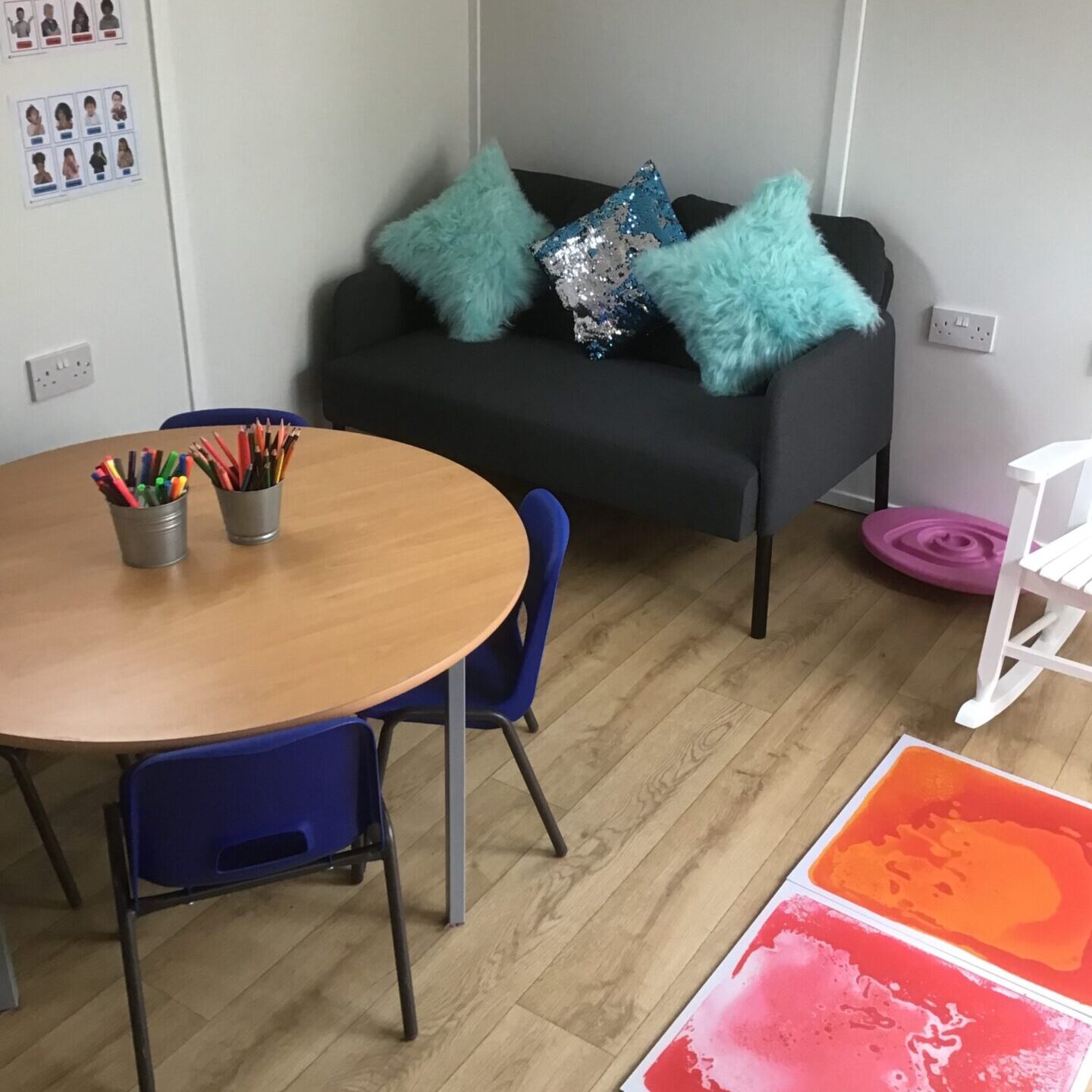
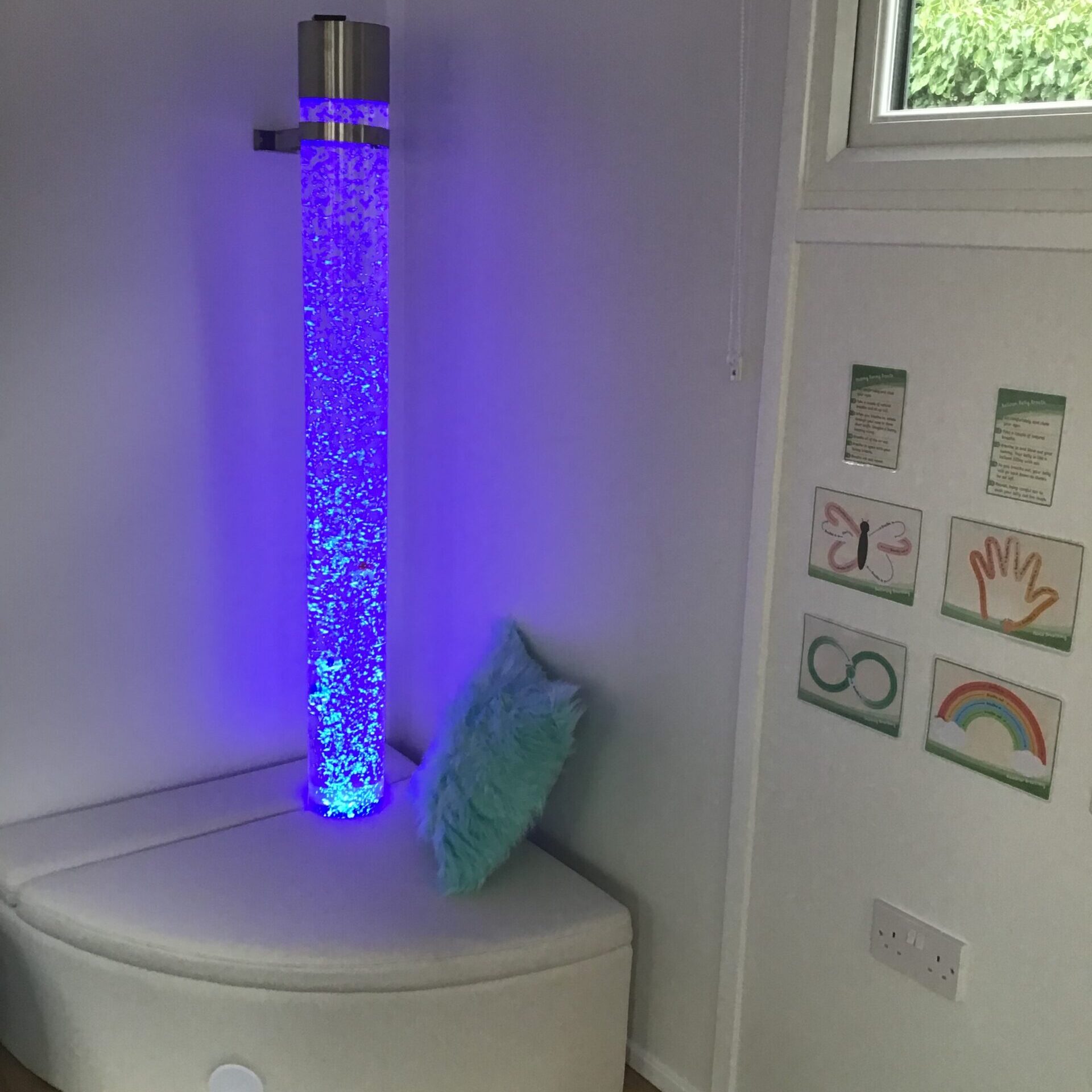
On Tuesday 7th January 2025, we had the pleasure of welcoming Dr. John Guy, our former Chair of Governors, back to our school to cut the ribbon and officially open The Nest. Accompanying him were our enthusiastic Year Two school councillors, who added to the excitement with their enthusiastic reactions, giving the room a big ‘wow’!
Our dedicated staff have put in tremendous effort to set up this new and vibrant space, which serves as a space for wellbeing, sensory circuits and for ‘Little Owls’, a space for a group of pre-verbal children. The Nest is equipped with a variety of resources designed to promote relaxation and sensory exploration, including a bubble tube, a rocking chair, laser lights, an infinity mirror, and much more! The addition of The Nest benefits all of our children and supports their wellbeing.

Parental Involvement:
Parents are a vital part of education for children with additional needs and are kept informed throughout the process. We aim to develop a positive working relationship with parents of all our children. Parental support is enlisted for a variety of simple activities and games at home to try and reach a child’s targets co-operatively. Such activities might include sharing books at home, doing handwriting/tracing activities, playing I spy, memory games or jigsaws, learning key sight words and tricky words. Parents are also invited to periodic review meetings to share what is working well and plan the next steps for their child.
Young Carers
Identifying and supporting Young Carers at Hatfield Peverel Infant and Nursery School
We are committed ot ensuring that all children get the support they need to have a positive school experience, are happy in school and can achieve their full potential.
We know that for some children, factors outside of school can have a big impact on this, particularly if there is someone in their family or a friend who is ill, disabled, or has a mental health difficulty.
Children can be Young Carers for lots of various reasons:
They may be providing physical support to a parent or sibling with a physical illness and may help with tasks including fetching things, cooking, or helping with any everyday activities.
They may be helping a loved one with a disability who needs help with more personal tasks such as getting dressed.
They may be providing emotional support such as giving comfort when an autistic sibling is upset, taking responsibility for young siblings whilst parents are busy doing other jobs around the house, or checking that someone feels okay.
Some Young Carers may be doing a lot of caring, others just a small amount but are impacted by the situation at home.
There is a lot of support for Young Carers and their families should they need it, both in and out of school, including the Essex Young Carers Service (document below) and Barnados.
If you believe any of the above applies to your child, then please contact the school office who will direct you to a member of staff.
Trama Perceptive Practice
Trauma Perceptive Practice is an Essex approach to understanding behaviour and supporting emotional well-being.
At Hatfield Peverel Infant and Nursery School we began our journey to become a TPP school in September 2022, with Mrs Fairbairn and Mrs McGaughey undertaking the training programme.
Since then, in 2024-2025 we completed the training for TPP for families and in Autumn 2025, led a TPP Parenting course.
The majority of staff have been trained in all elements and we refresh different aspects of the training for new staff and as and when we feel that different elements need revisiting.
TPP has been written and put together for educators to understand the impact of developmental trauma and chronic stress on a child’s development, behaviour and learning. In doing so, educators will have more understanding for how trauma and chronic stress alters brain development, causing delays in skill development which in turn can result further downstream in unhelpful and/or harmful behaviours at school.
It aids educators to shift from perhaps more traditional language to a trauma perceptive description of vulnerable individuals which in turn can create the necessary compassion and kindness instead of blame and shame, hope instead of hopelessness and connection and belonging rather than disconnection that are needed for the positive relationships to occur.
This approach explores the interconnected and critical importance of the development of the human brain, the attachment relationship, the differential impacts of childhood developmental trauma on children and young people’s social and emotional health and the importance of developmental experiences through supported relationships. These relationships can be powerfully supportive in enabling the child to become resilient and to mitigate against the impact of trauma.
Importantly, we must also remember that children and young people are more than what happened to them; they are more than just their trauma. Whilst the question of ‘what’s happened?’ is more helpful than ‘what’s wrong?’, we must also not forget to be curious to look for the strengths and to ask ‘what’s right, where are this persons strengths or what is going well?’
TPP forms our Relationship and Behaviour policy and we use restorative conversations throughout the school day and in our lunch time SMART thinking sessions.